Maeysa Fatimea
Class of 2024
Advisors
- - Bisma Askari
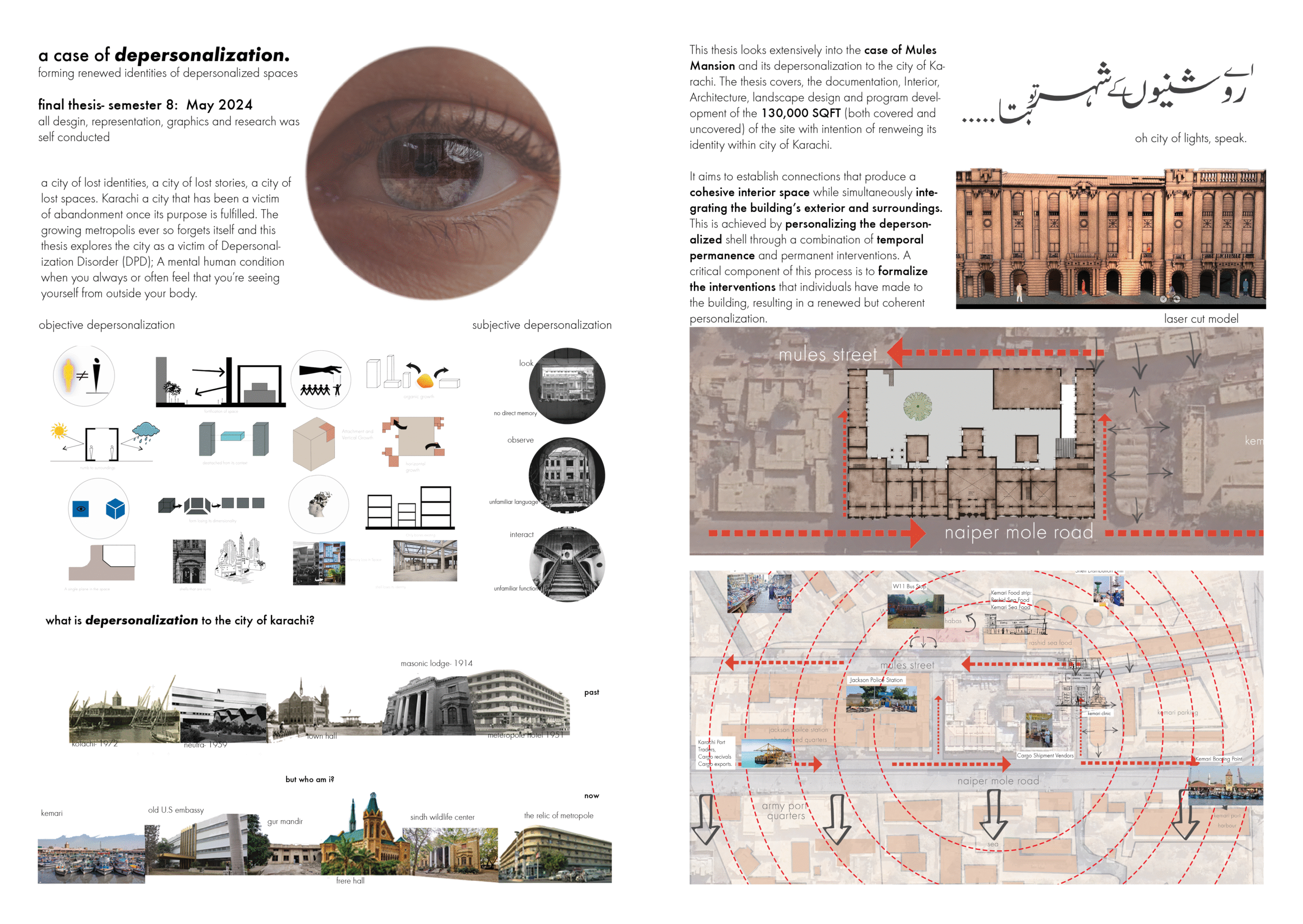
Aae Roshino ke shehar, tu bata…A case of depersonalization.- forming renewed identities of depersonalized spaces
Site: Mules Mansion, Karachi
This thesis aims to establish connections that produce a cohesive interior spaces while simultaneously integrating the building’s exterior and surroundings . This is achieved by personalizing the depersonalized shell through a combination of temporal permanence and permanent interventions. A critical component of this process is to formalize the interventions that individuals have made to the building, resulting in a renewed but coherent personalization.
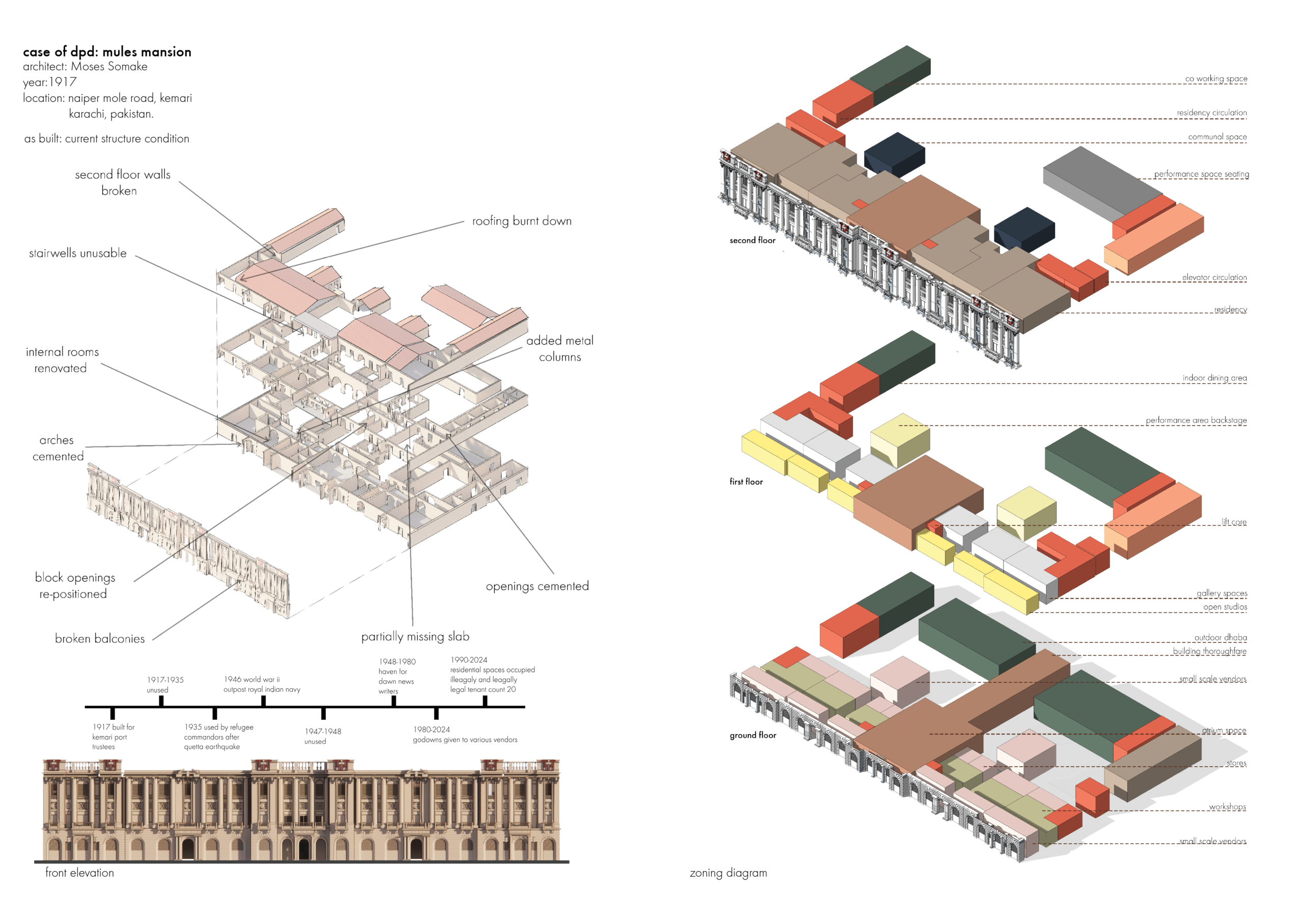
This adaptive reuse thesis looks extensively into the case of Mules Mansion and its depersonalization to the city of Karachi. The investigation began by an extensive study and documentation of the existing structure and neighbourhood to formulate a comprehensive program that would sustain the building both economically and socially.
The thesis covers the documentation, Interior, Architecture, landscape design and program development of the 130,000 SQFT (both covered and uncovered) of the site with the intention of renewing its identity within the city of Karachi.
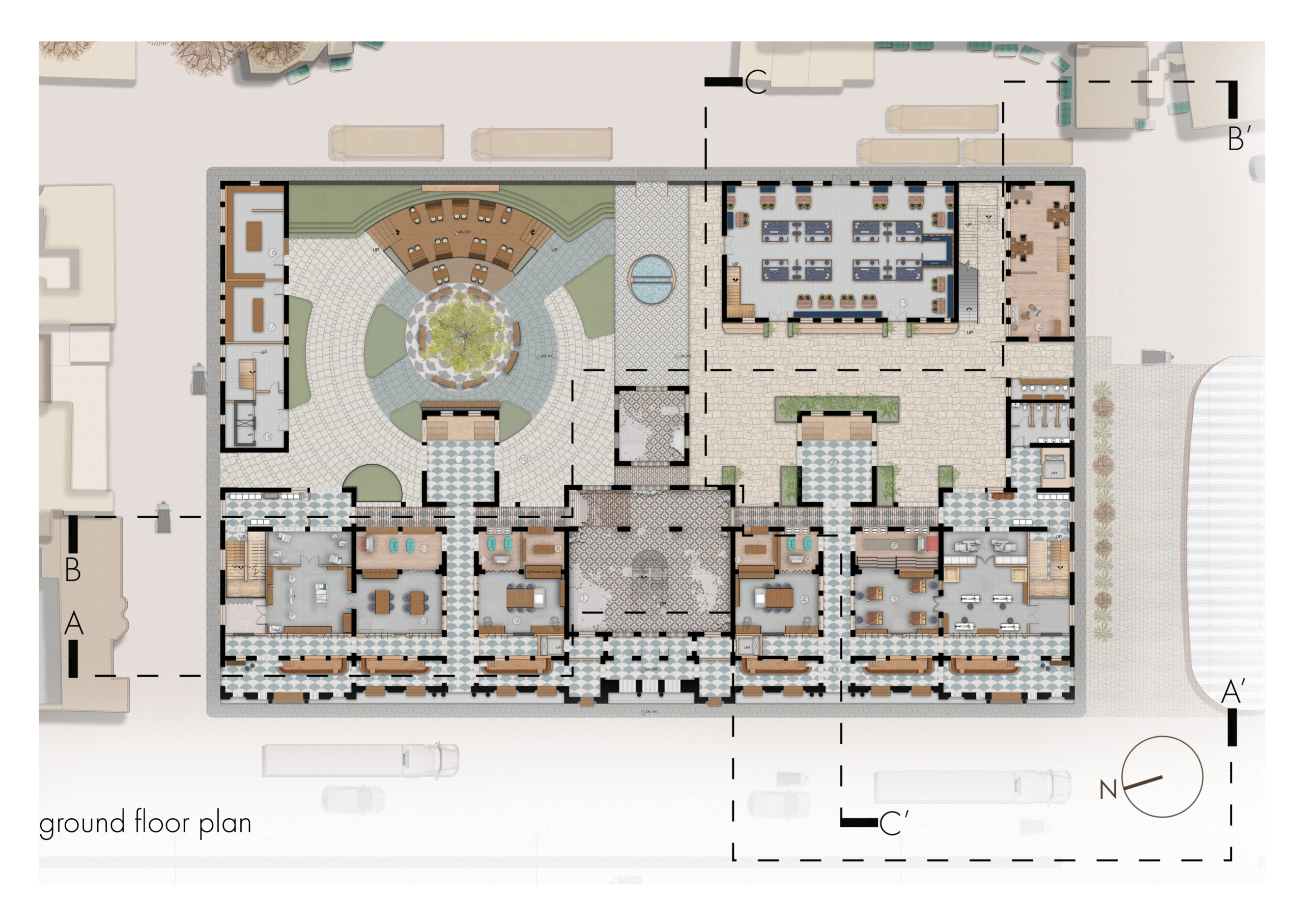
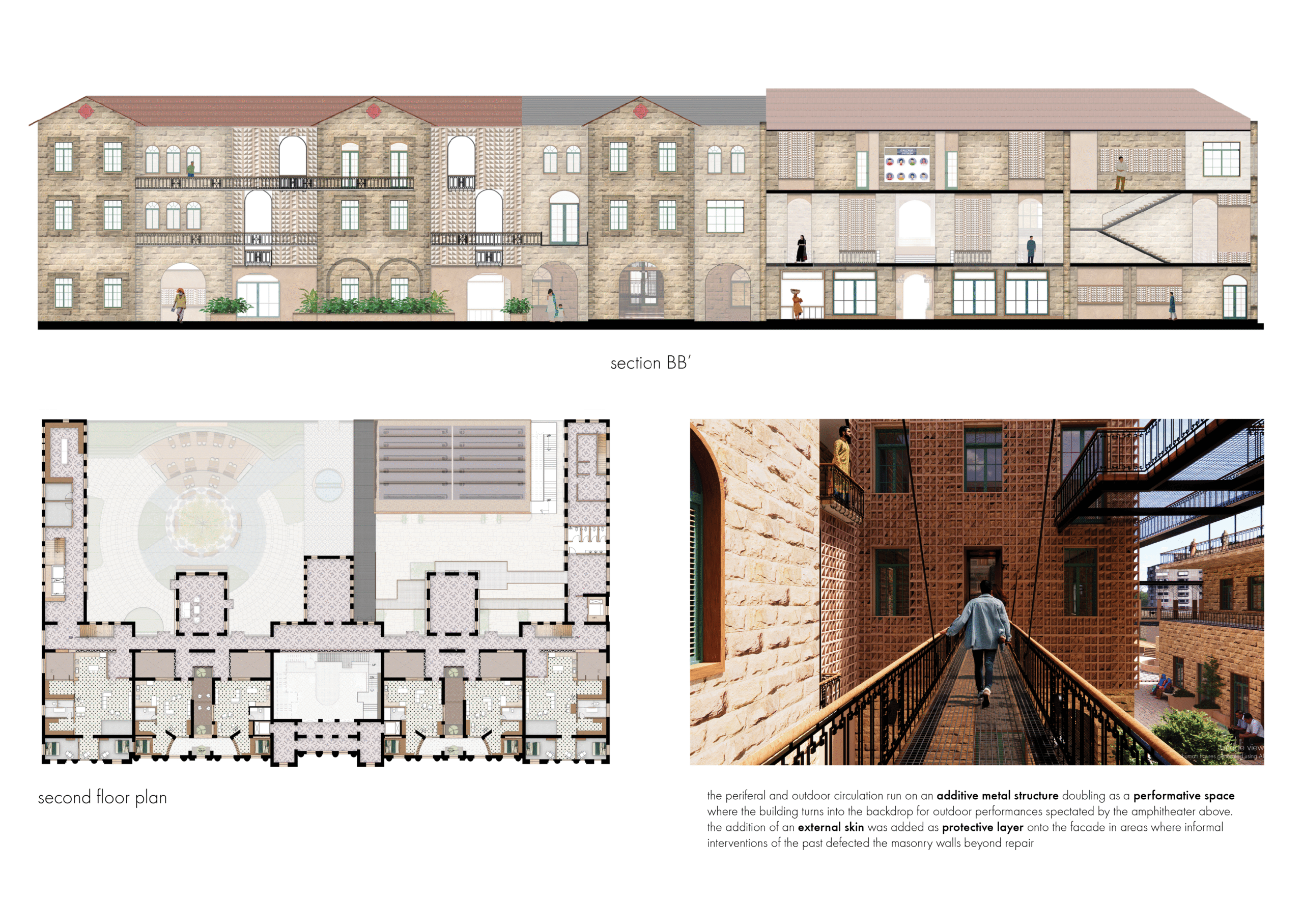
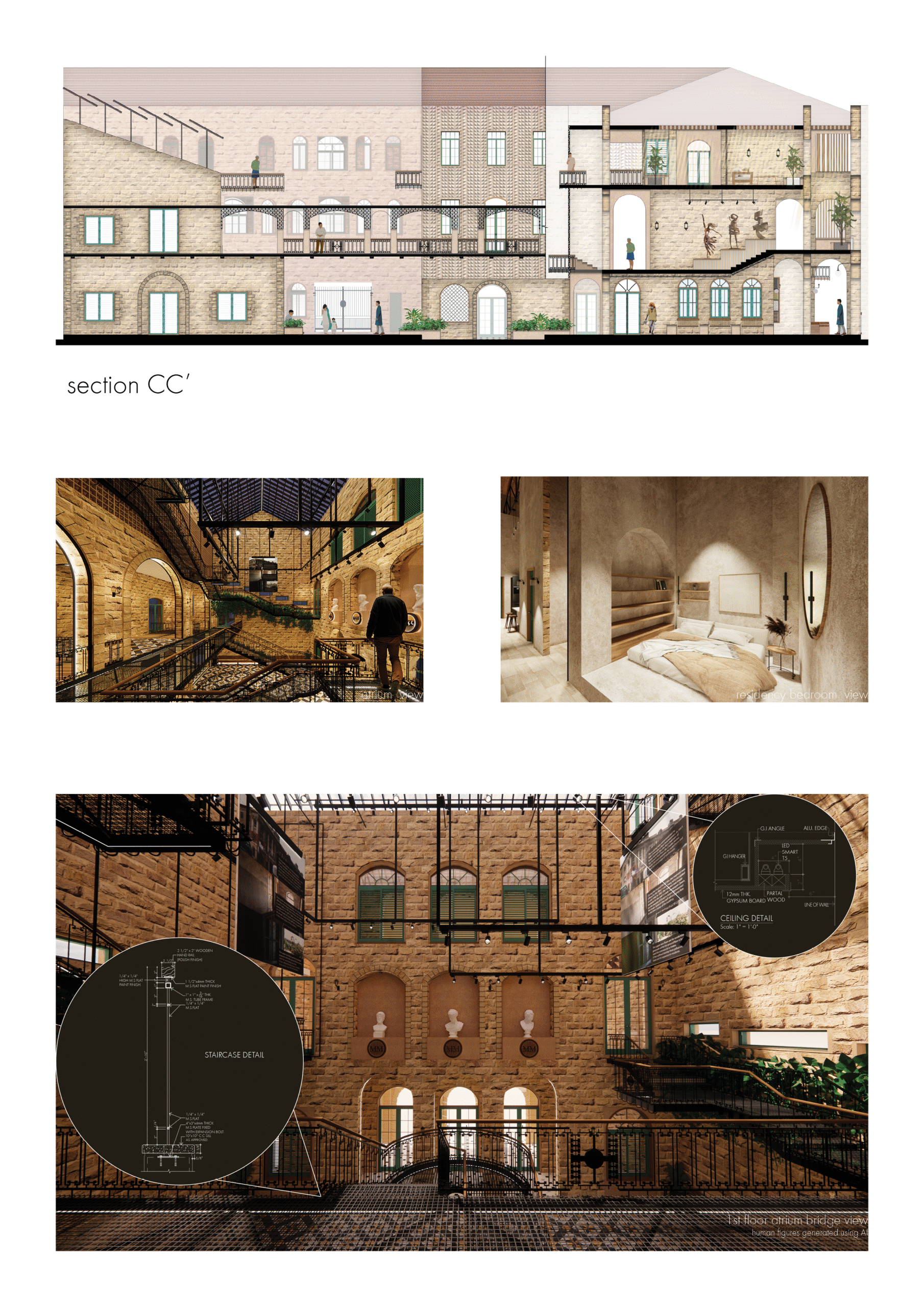
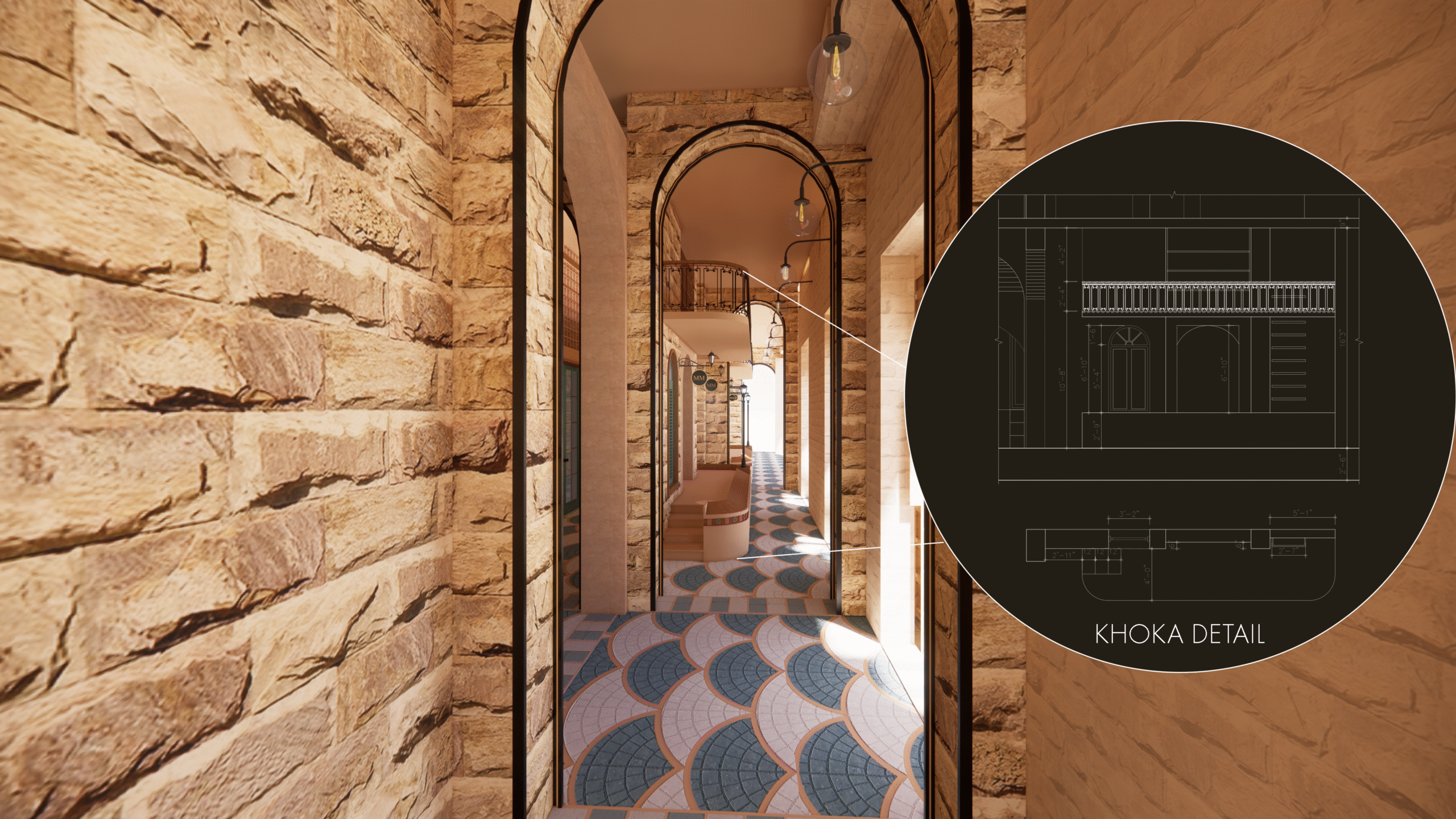
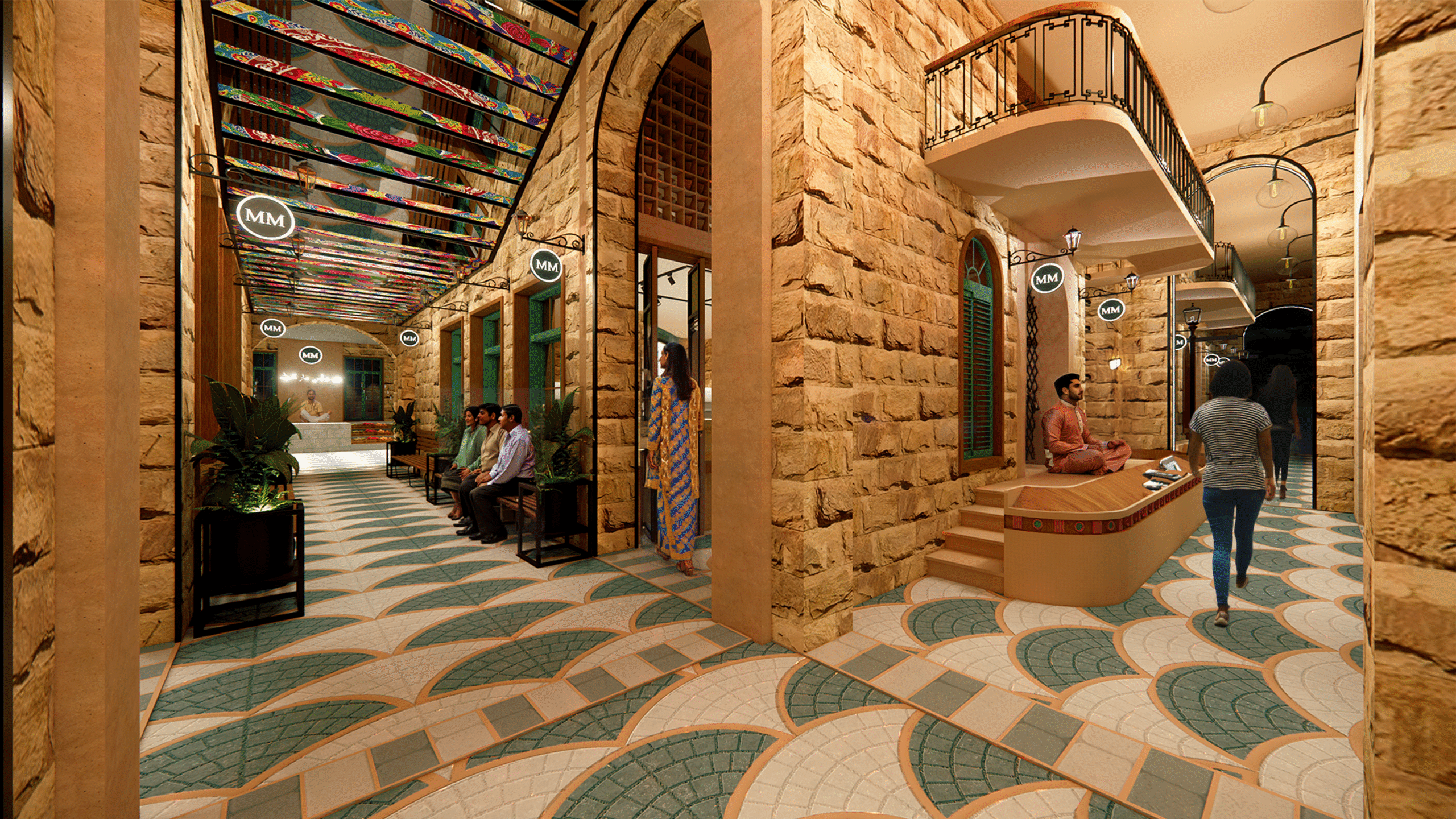
The ground floor layout focused on creating a sinuous circulation pathway that connected all building fragments into one. The ground floor walls were moved with skeletal structural support to house the new formalized khokas, made to cater to the informal vendors living as refugees on the streets. The front elevation was also entirely opened up with workshops sandwiched between commercial vendors, integrating craftsmanship into everyday life. The interior focused on creating points of personalization with details such as a mural mirror ceiling fixture, integrating the user as they walk through the corridor. The material palette was kept contextual to keep the purity of sandstone intact. The flooring pattern was designed with pavers existing onsite, redesigned to mimic fish scales while providing wayfinding, giving an ode to Kemari, the origin of Karachi.
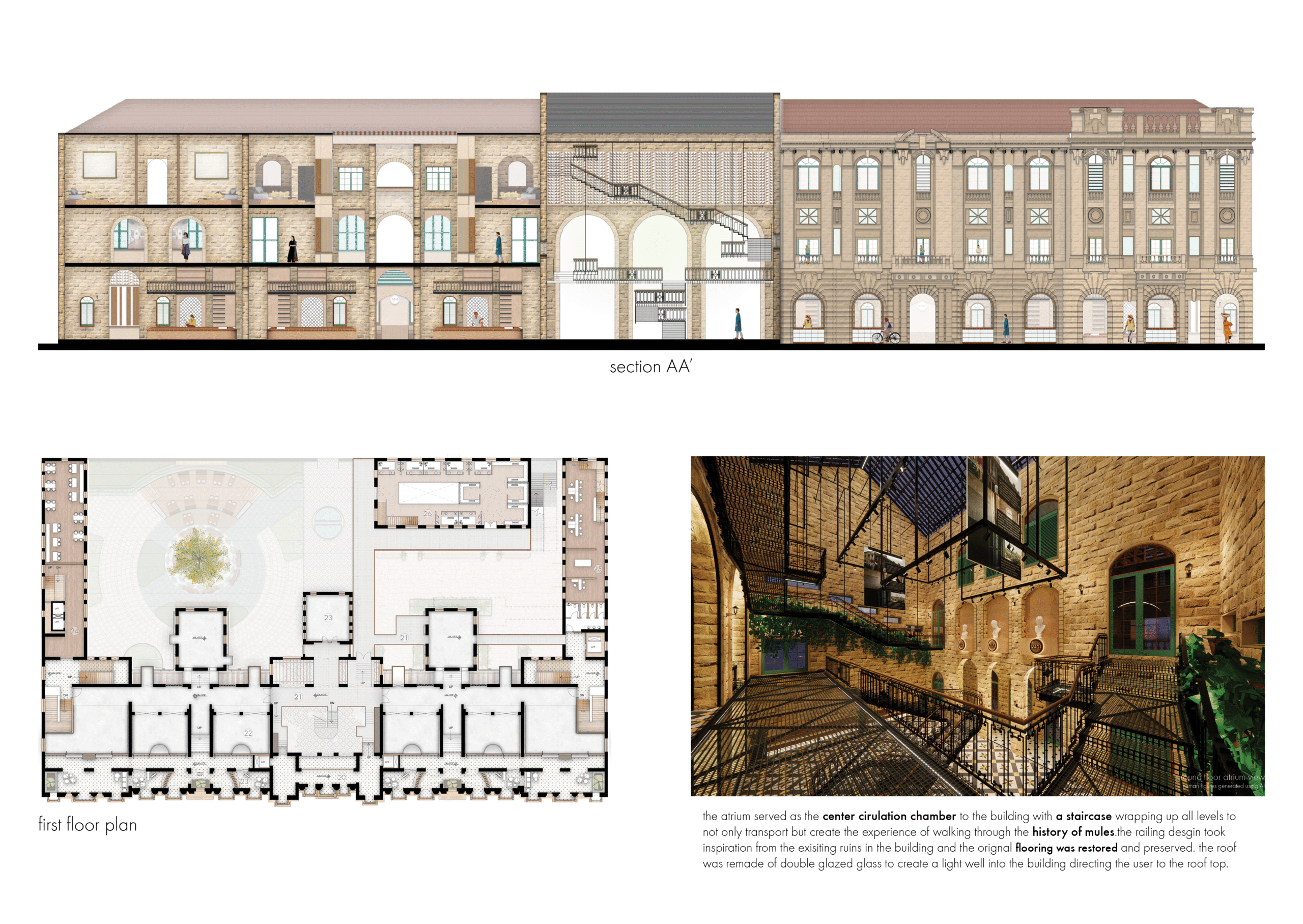
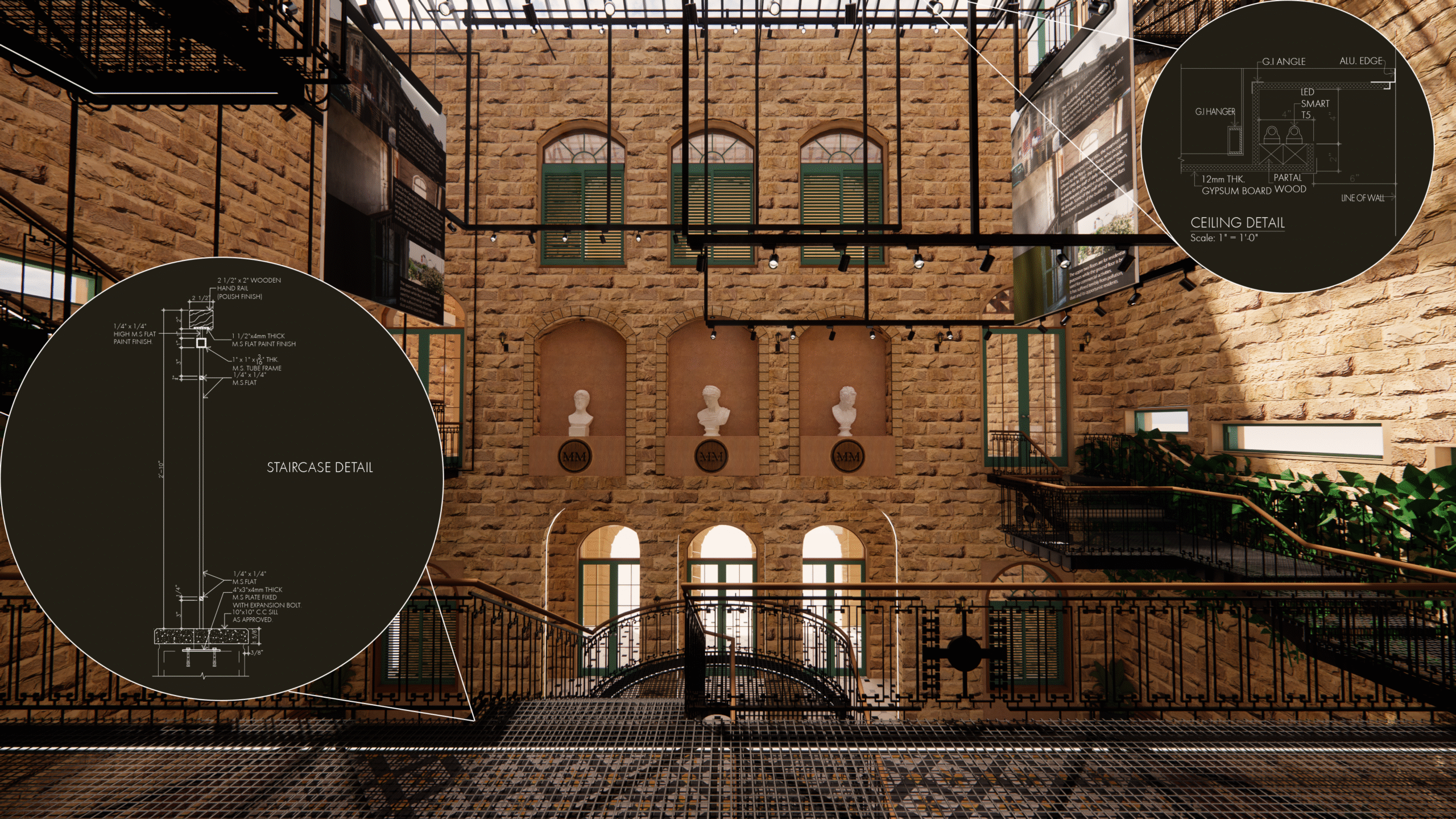
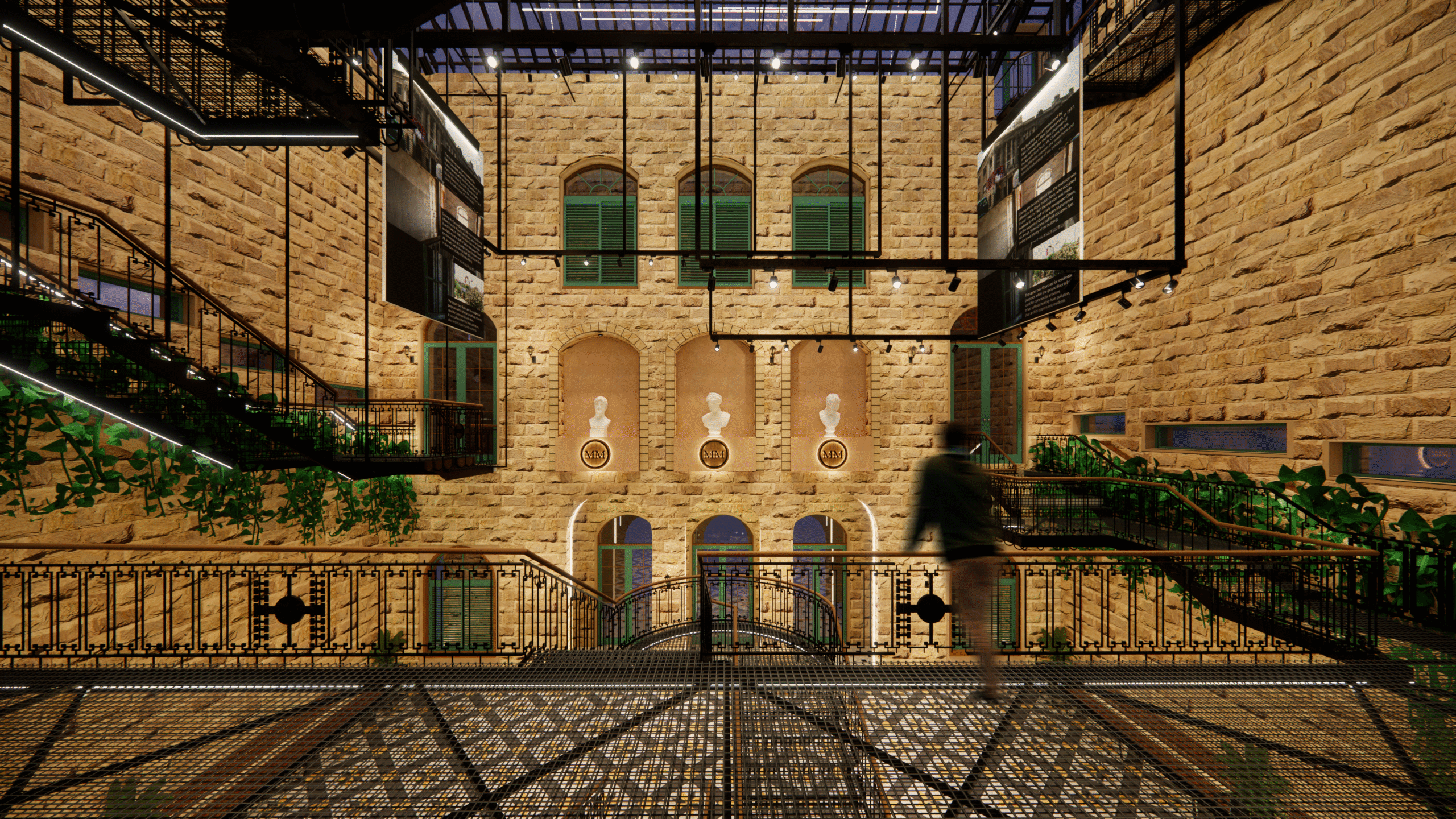
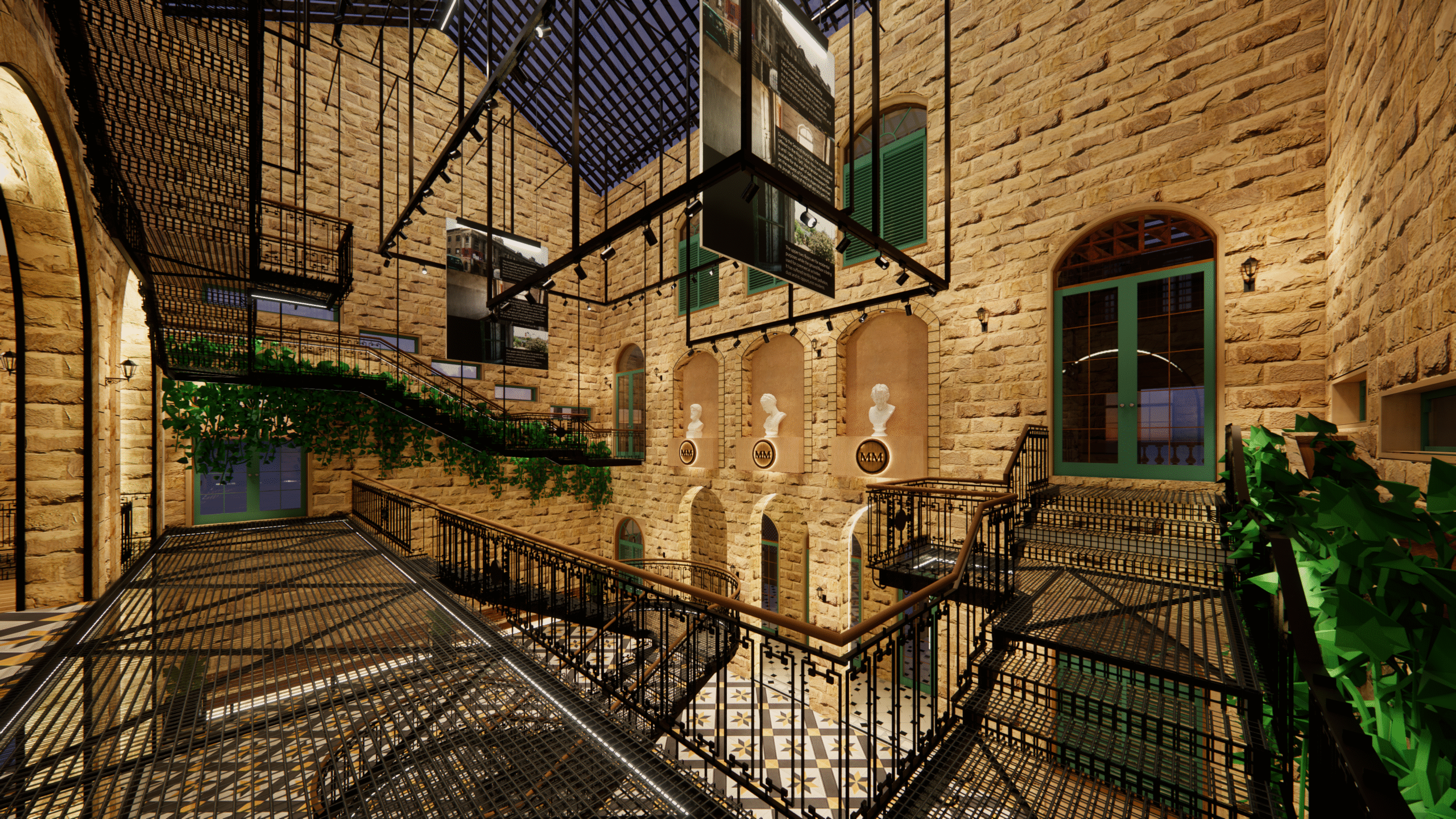
The atrium served as the center circulation chamber for the building, with a staircase wrapping up all levels to not only transport but also create the experience of walking through the history of mules. The railing design took inspiration from the existing ruins in the building, and the original flooring was restored and preserved. The roof was remade of double-glazed glass to create a light well into the building, directing the user to the rooftop.
The periferal and outdoor circulation runs on an additive metal structure, doubling as a performative space where the building turns into the backdrop for outdoor performance,s spectated by the amphitheater above.the addition of an external skin was added as a protective layer onto the facade in areas where informal interventions of the past damaged the masonry walls beyond repair
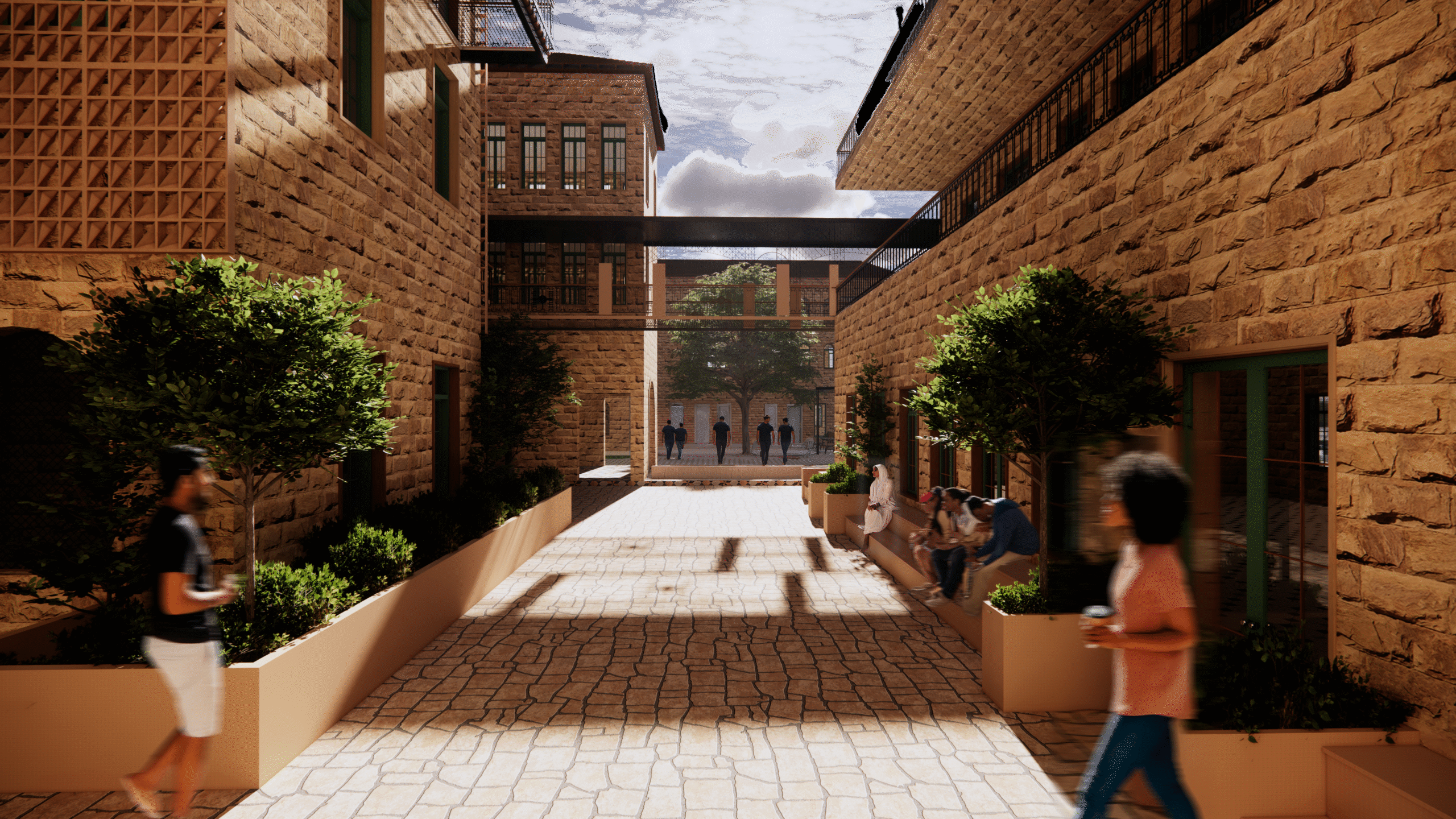
The courtyard serves the purpose of outdoor physical connection to the urban landscape, creating access points from each side of the plot. The bridges are designed in a skeletal nature to ensure visual connection and not impose on the heavy built sandstone.